

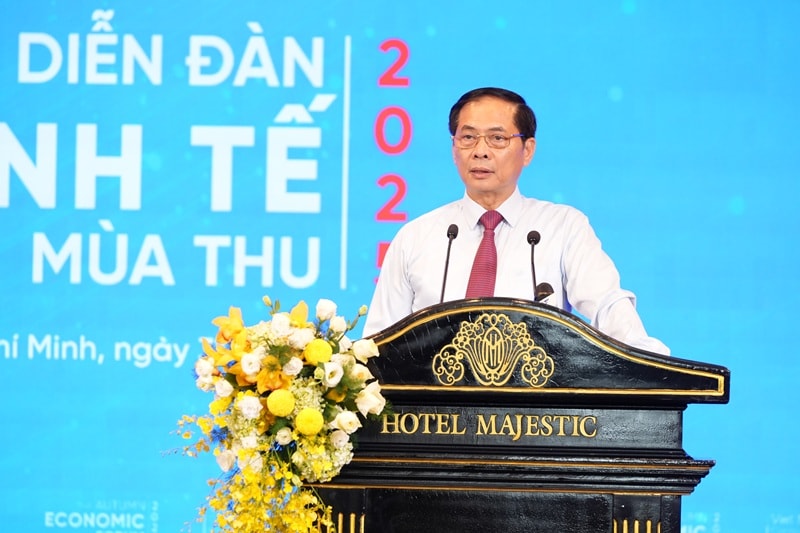
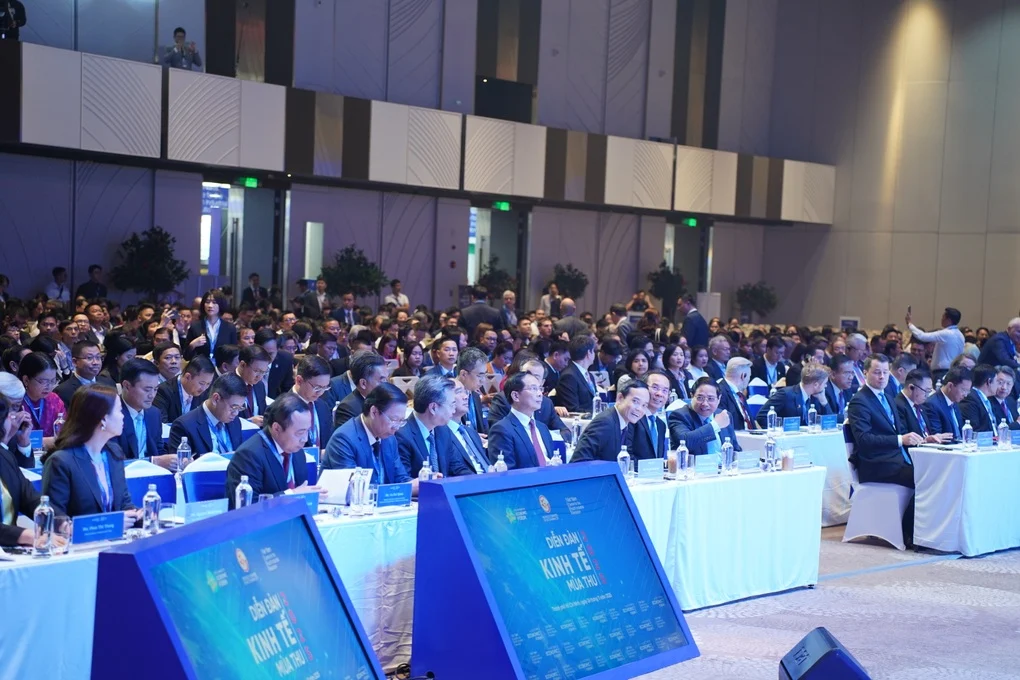
On the afternoon of December 31st, the Ho Chi Minh City People’s Committee organized a conference to summarize the 2025 Autumn Economic Forum. The conference was chaired and directly supervised by Deputy Prime Minister Bui Thanh Son, along with leaders from central ministries and agencies, economic experts, and representatives of domestic and foreign business communities.
Reporting at the conference, Mr. Le Truong Duy – Director of the Center for the Fourth Industrial Revolution in Ho Chi Minh City (C4IR), and Deputy Head of the Forum’s Organizing Committee – stated that this year’s event has recorded an unprecedented scale in its history.
The forum attracted over 1,800 delegates and nearly 100 international delegations, a 3-4 fold increase compared to previous years. A significant highlight in terms of scale was the presence of representatives from 10 Centers for the Fourth Industrial Revolution (C4IR) and more than 75 science, technology, and innovation centers globally. These figures demonstrate the growing appeal of Ho Chi Minh City as a new destination for regional policy and technology dialogue.
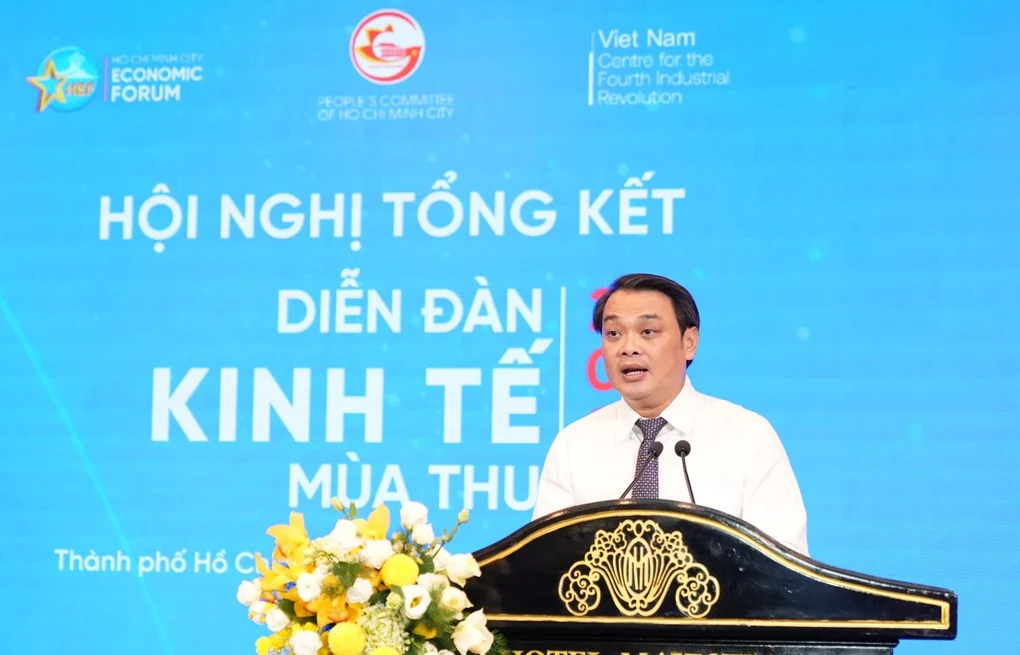
Mr. Le Truong Duy emphasized that, in terms of growth quality, the Forum clarified the role of science and technology as a key driving force. According to published data, this sector directly contributes approximately 1.4 trillion VND to the overall GDP. This result is concretized through 16 Memorandums of Understanding (MOUs) announced between domestic and international partners in many key areas such as finance, fintech, blockchain, digital financial infrastructure, and semiconductors.
Activating social resources and technological footprint
According to the organizers, the concluding conference marked a significant shift from written memoranda of understanding to actual investment flows. The list of 30 key programs, schemes, and projects, scheduled for implementation immediately after the 2025 Autumn Economic Forum, goes beyond mere planning; financial resources from the private sector have already begun to be mobilized in response to the city’s call.
Specifically, Vietnam Technological and Commercial Bank ( Techcombank ) has officially announced its participation in a large-scale preferential credit program in partnership with the city. This credit package, worth VND 1,500 billion, will be implemented during the period 2026-2030 and is specifically designed to support businesses in implementing smart manufacturing transformation.
Nam A Bank also announced its support for the plan to promote financial programs aimed at attracting remittances into science and technology. This initiative, advised by HCMC C4IR, is expected to redirect remittances – a strength of Ho Chi Minh City – more strongly into high value-added sectors such as research and innovation, instead of focusing solely on consumption or real estate. In addition, the city is also tasking HCMC C4IR with researching a project for an off-budget fund to attract experts and develop talent, creating flexible financial tools to support the transfer of new technologies.
For the semiconductor industry – a new growth engine for the city – strategic steps have been clearly outlined through cooperation with the Southeast Asian Semiconductor Industry Association (SEMI SEA). Ho Chi Minh City plans to host the Semiconductor Summit in 2026 and the SEMIEXPO Exhibition, combined with intensive training programs. Leading technology companies such as Synopsys, FPT Semiconductor, TTI, and partner DeepSeek have also been connected to explore the possibility of collaborative research and development of AI algorithms and technology transfer.
In particular, the conference highly appreciated the significance of the Joint Statement between the Ho Chi Minh City People’s Committee and the World Economic Forum (WEF) on the “Initiative to Promote Smart Manufacturing and Responsible Industrial Transformation”. The fact that Vietnam is one of the few countries selected by the WEF to pilot this initiative is vivid evidence of Ho Chi Minh City’s proactive approach in co-creating global solutions.
Shaping a new position in the global value chain.
In his remarks, Deputy Prime Minister Bui Thanh Son highly appreciated the fact that the Autumn Economic Forum 2025 had created a space for policy dialogue linked to action, connecting policymakers in Ho Chi Minh City and Vietnam with businesses, experts, and international researchers.
According to the Deputy Prime Minister, the Forum is a place to analyze major trends, identify new challenges, and propose specific directions and solutions for development, especially in the context of the strong global green transformation and digital transformation.
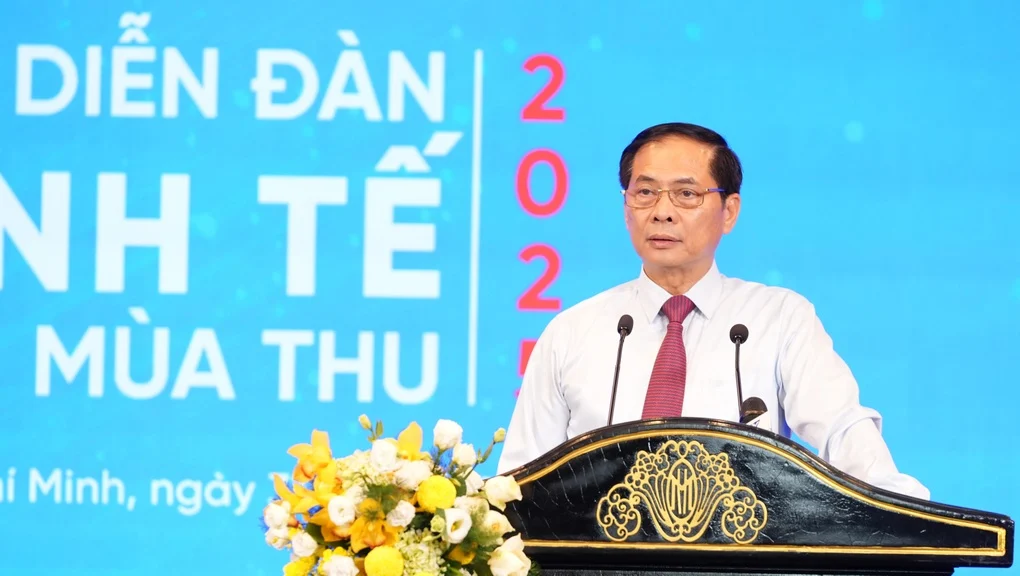
The Deputy Prime Minister requested Ho Chi Minh City to urgently implement plans and projects based on the cooperation contents and recommendations reached, especially in the fields of smart economy and sustainable development. More importantly, the city needs to prepare for the 2026 Autumn Economic Forum early in the year, with the goal of improving the quality of content and scale.
The future orientation is to make the Forum a crucial link in the chain of cooperation: the WEF Annual Meeting in Davos – the WEF Pioneers Conference (China) – the Autumn Economic Forum (Ho Chi Minh City). This series of events will ensure interconnectedness and continuity, from global strategic thinking to concrete actions at the local level.
Vice Chairman of the Ho Chi Minh City People’s Committee, Nguyen Loc Ha, affirmed the determination to put the Forum’s results into practice. In the first quarter of 2026, the Ho Chi Minh City People’s Committee will complete the review, classification, and issuance of an implementation plan for the aforementioned cooperation contents and initiatives. This will be an important legal basis for phased implementation, monitoring, and evaluation of effectiveness, ensuring that commitments do not remain merely on paper.
Regarding the direction for 2026, city leaders have identified coordinating with the WEF to co-organize the 2026 Autumn Economic Forum as a key task. Ho Chi Minh City will proactively coordinate with the Ministry of Foreign Affairs to develop the theme and design the program according to the “Forum within a Forum” model – both aligned with international trends and of national significance, while directly serving the city.
Vice Chairman Nguyen Loc Ha also emphasized that Ho Chi Minh City identifies the WEF as a strategic partner in economic diplomacy and technology diplomacy. The goal is to effectively mobilize international resources in knowledge and technology to serve Ho Chi Minh City’s aspiration for double-digit economic growth in the coming period, while accelerating the process of building a smart megacity model commensurate with its potential and development opportunities.
Source: Dan Tri Newspaper